At a glance
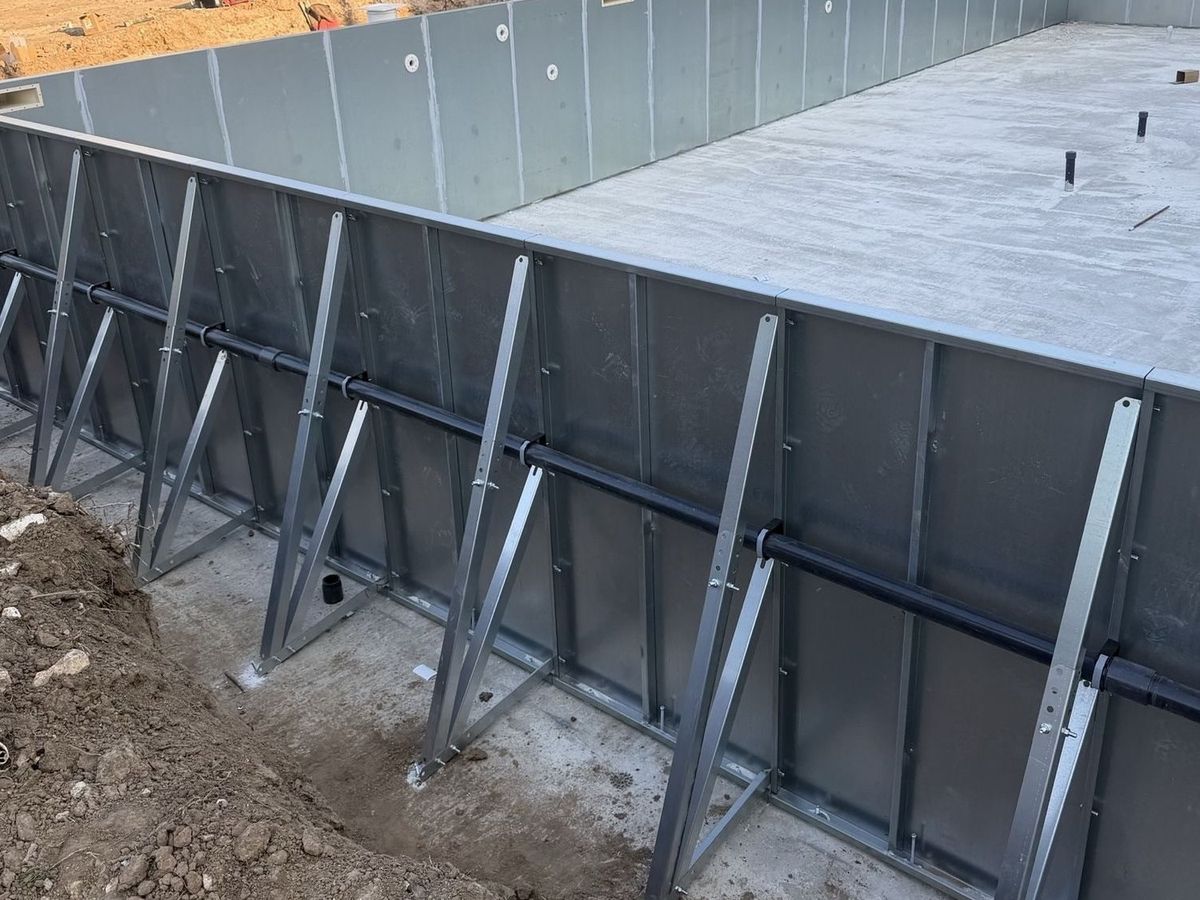
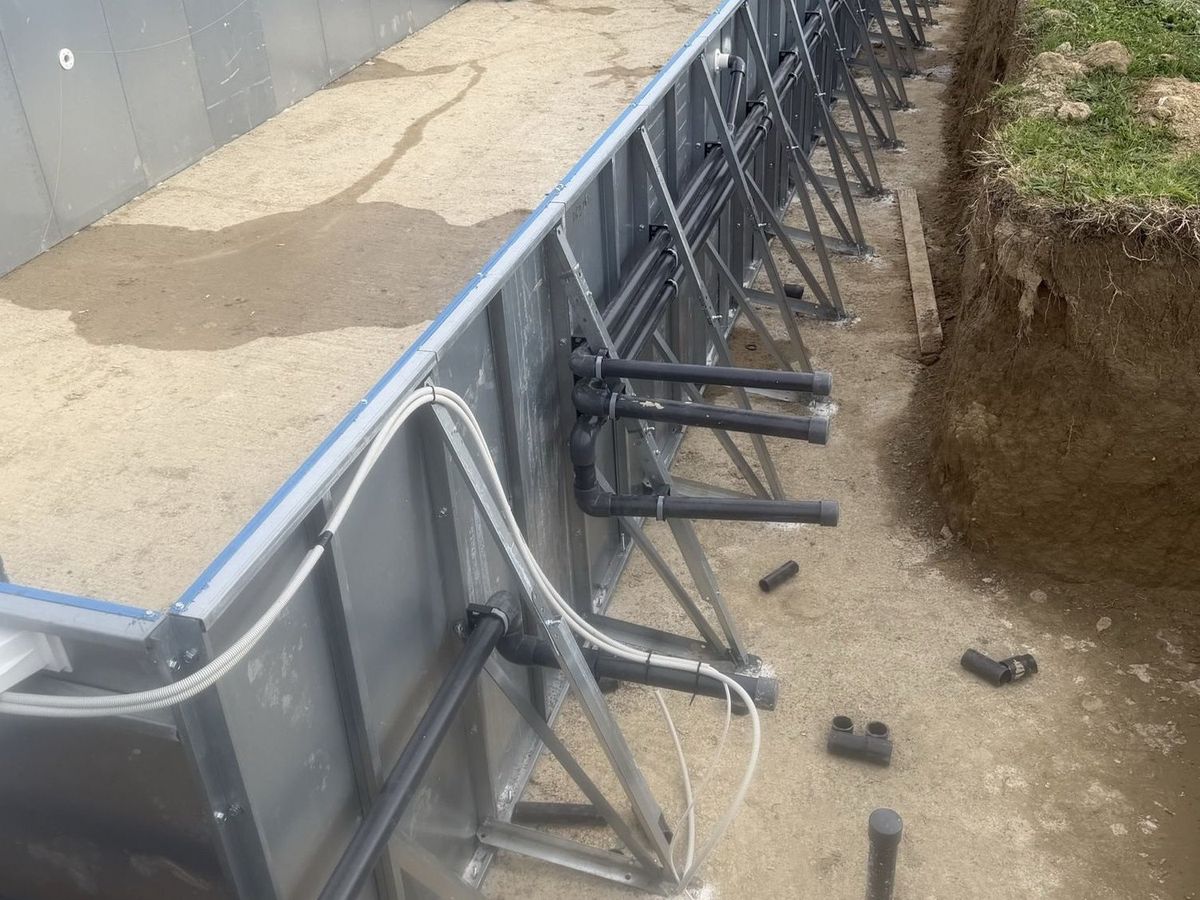
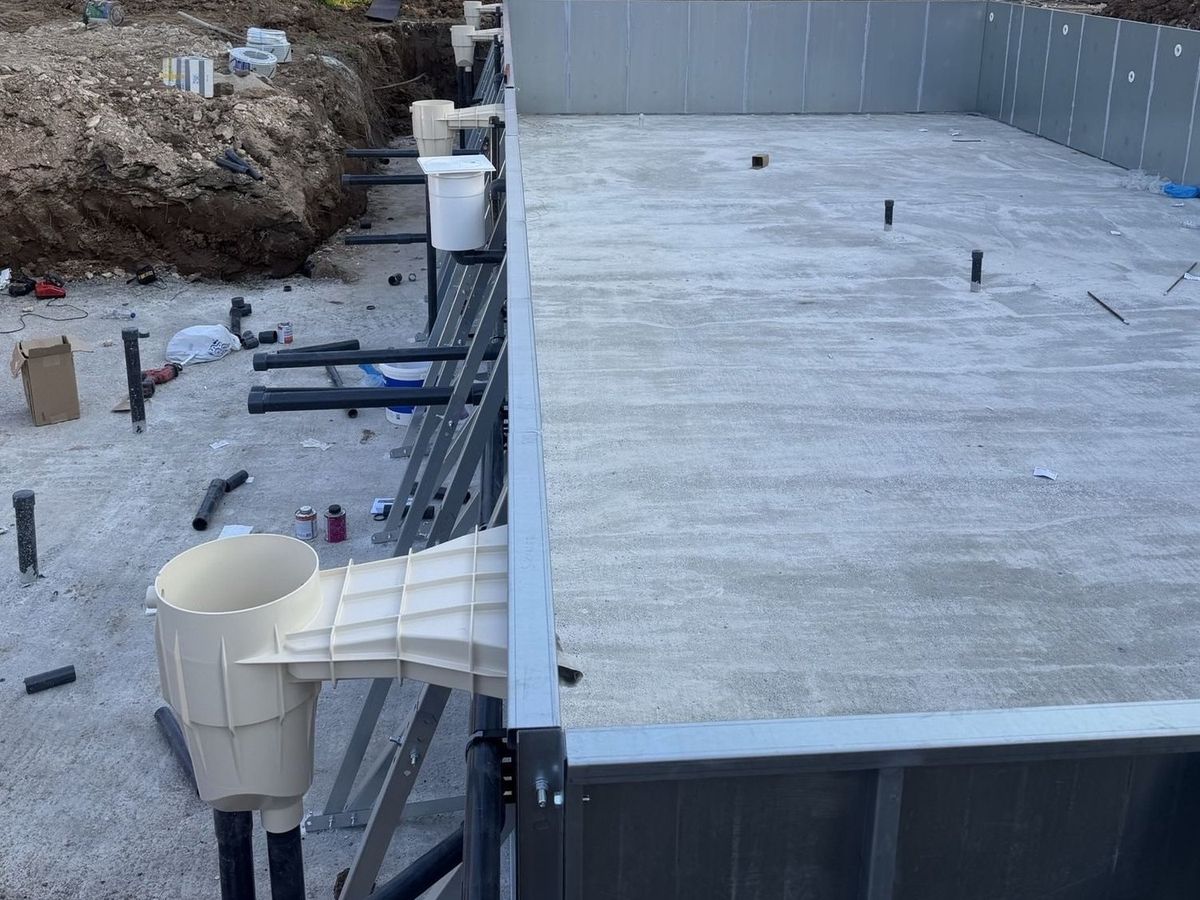
Each wall section is a sheet of steel, folded and stiffened in the factory, with openings for skimmers and inlets in exact positions. Sections are bolted together, braced from outside with triangular buttresses and tied in at the base with a concrete ring.
Why galvanising
Bare steel rusts in damp soil. Hot-dip galvanising dips it in molten zinc, which forms a layer that slowly sacrifices itself instead of the steel. On top of that, the walls never touch the pool water: the membrane sits in between.
Buttresses: the hidden heroes
When the pool is full, the water pushes the walls outwards. When it is empty, the soil pushes them inwards. Triangular buttresses at regular intervals, anchored in concrete, keep the walls vertical in both cases.
Factory accuracy
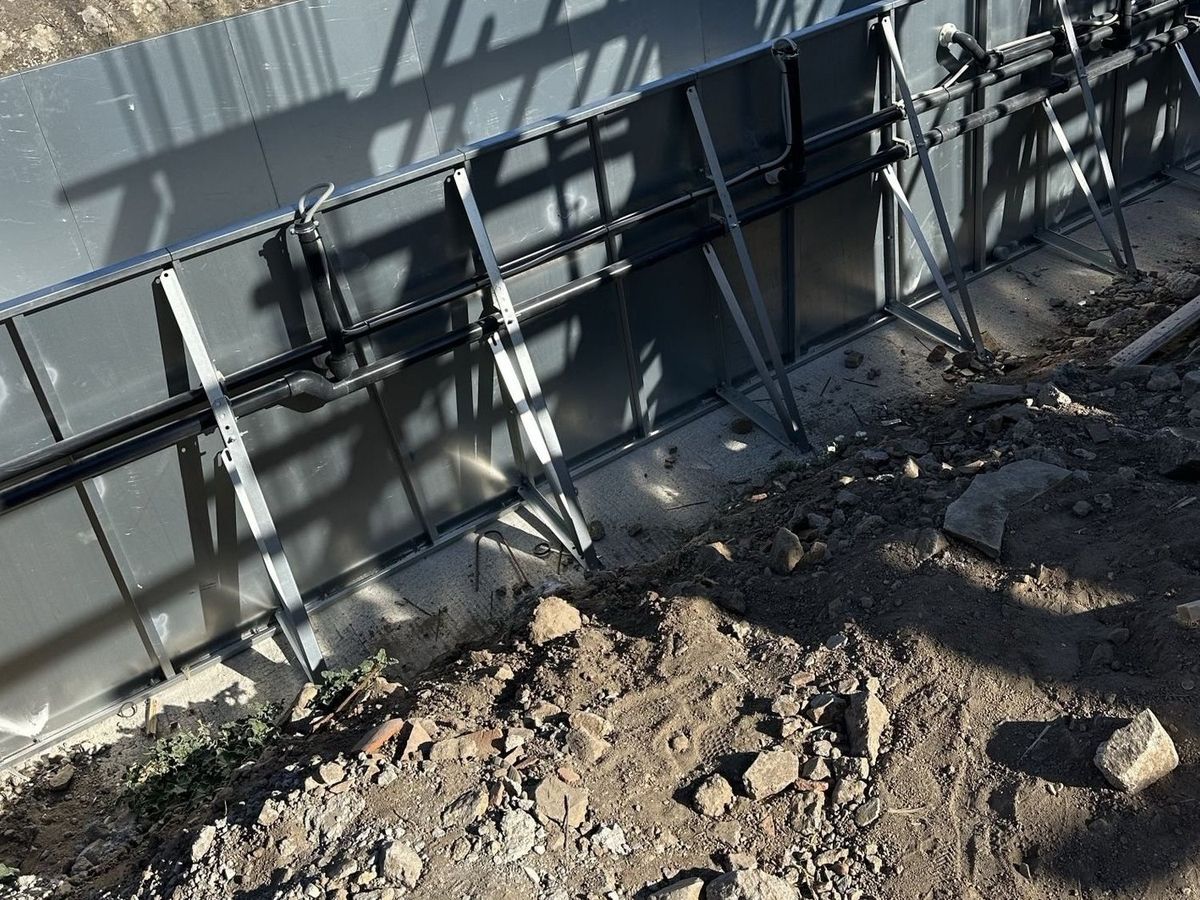
Because the walls are made by machine, the corners are square and the top edge is level. You can see it at the end: the membrane lies without wrinkles, the coping sits straight, and the water on an infinity edge spills evenly.
What about earthquakes?
Steel walls have a little elasticity, and the membrane does not crack the way rendered concrete can. In a country with earthquakes this is a practical advantage: a small ground movement does not necessarily mean a leak.