Clear water is not just a question of chlorine. It is a question of circulation: how often all the water passes through the filter, and whether it reaches every corner of the pool. We design this before the first bolt goes in.
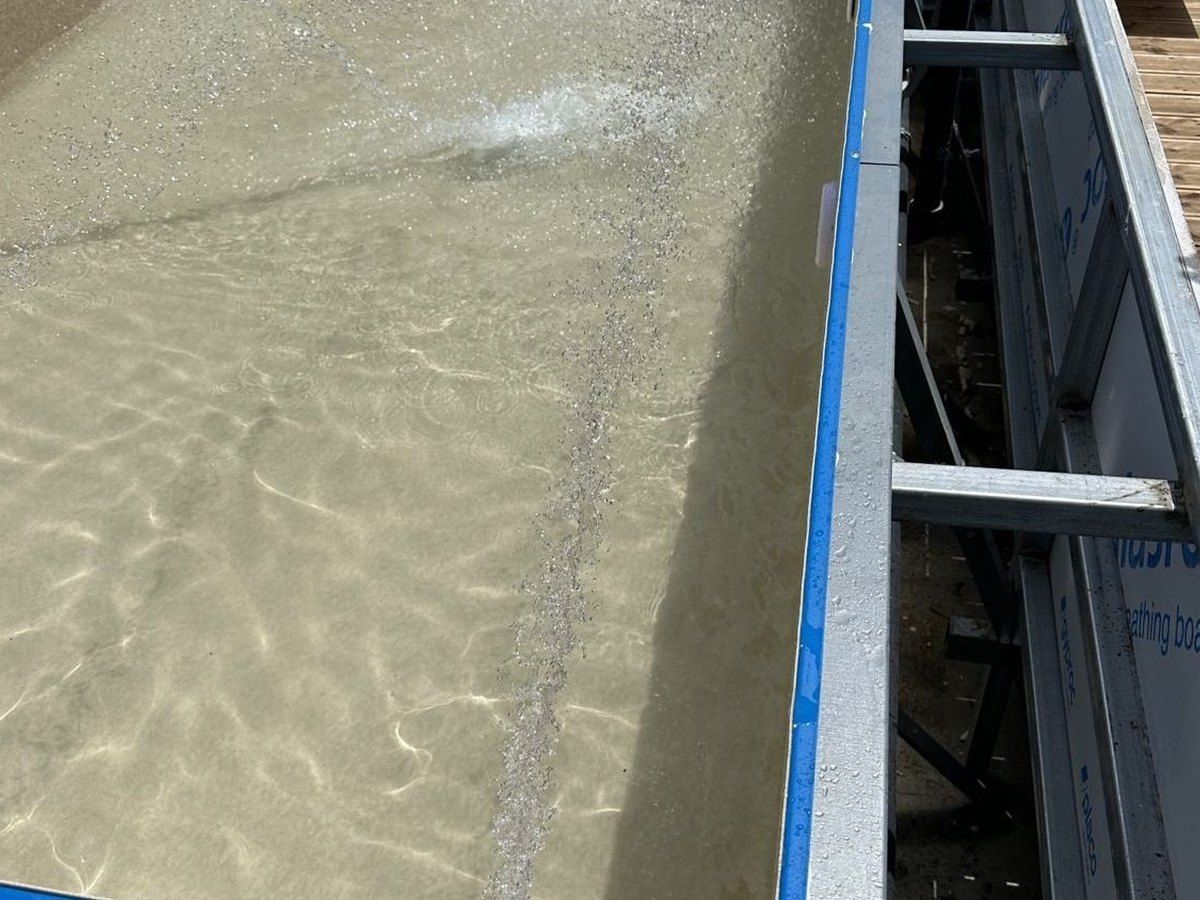
Return nozzle pushing filtered water back into the pool
At a glance
The pump draws water from the surface (skimmer or overflow channel) and from the floor, sends it through the filter and returns it through the inlets. A well-designed circuit turns over the whole volume several times a day.
Parts of the circuit
Skimmer: collects leaves and dust from the surface
Main drain: draws the heavier, colder water from the floor
Filter: traps the particles
Return inlets: send the clean water back and move the surface
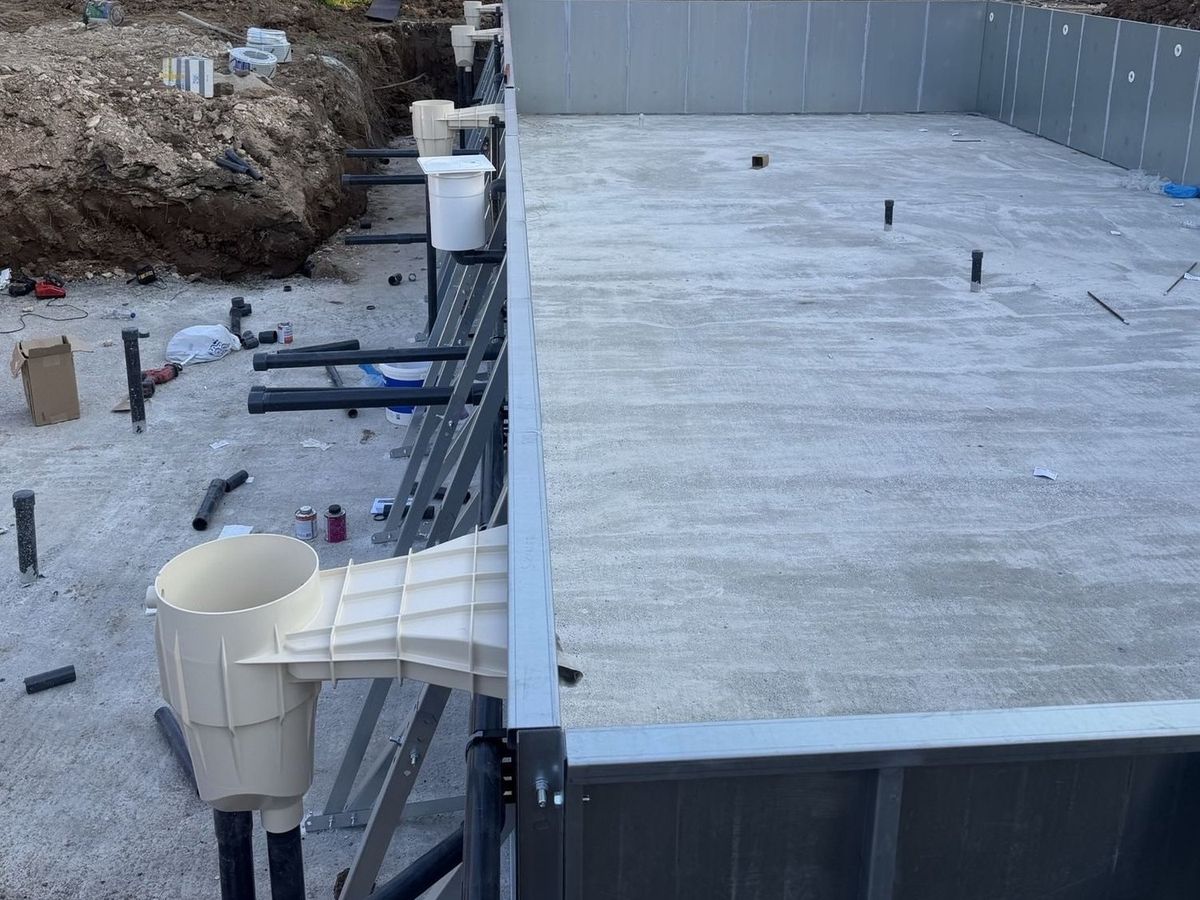
Skimmer fitted into the steel wall of a prefab pool
Sand or glass?
Most pool filters are tanks filled with quartz sand or recycled active glass. Glass filters slightly finer and rinses more easily when backwashed. Both do the job well if the filter is the right size for the pool.
Where the inlets point
Return inlets are not placed at random. We aim them to create a gentle rotation that pushes floating debris towards the skimmers and leaves no dead corners where algae could take hold.
Return nozzle pushing filtered water back into the pool
Backwashing
When the filter fills with dirt, the pressure on the gauge rises. A valve sends the water through backwards, rinsing the sand or glass and sending it to the drain. We show you how at handover. More on flow in the inverter pump guide.
Photos from our projects
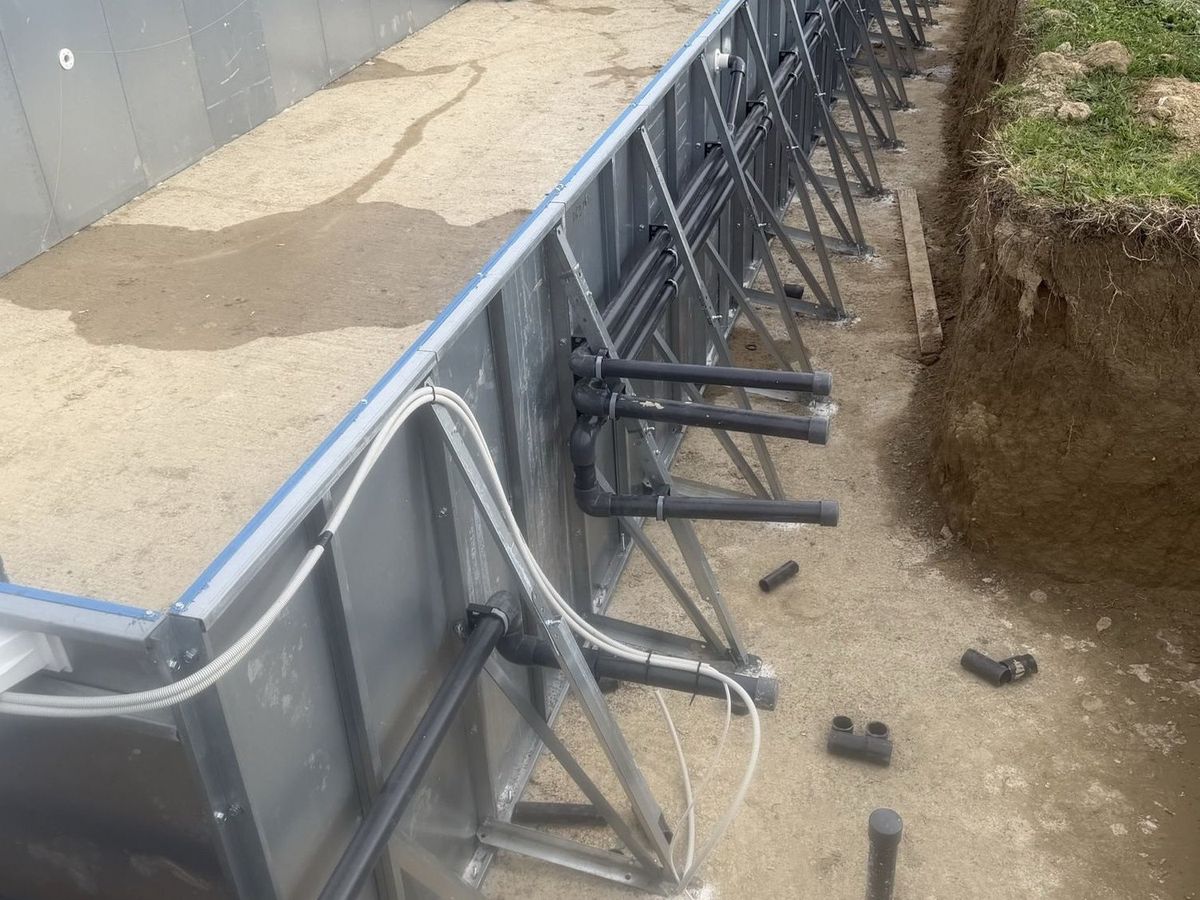
Return nozzle pushing filtered water back into the poolSkimmer fitted into the steel wall of a prefab poolPanels and pipework inside the pool pit