At a glance
pH is best kept at roughly 7.2–7.6 and free chlorine at low but steady levels, as recommended by the chemical and membrane manufacturers. Test once or twice a week in summer, less often in winter.
pH first
pH shows whether the water is acidic or alkaline. When it is high, chlorine works much worse and the water goes cloudy. When it is low, it stings the eyes and wears the materials. That is why we always adjust pH first and chlorine second.
Free chlorine
Chlorine disinfects the water. A little and steady is better than a lot now and then. Big doses “by eye” fade the membrane and irritate the skin. Shock chlorination is only for when it is needed, for example after a storm or a busy day, and ideally in the evening.
Technician's tipNever drop chlorine tablets straight onto the floor or the steps. On a membrane they leave a stain. Put them in the skimmer basket or a floating dispenser.
Testing
A simple kit with tablets or strips is enough for the basics. If you would rather forget about testing, automatic dosing does it for you. See automation.
Cloudy water: what to check
- Is the pump running enough hours?
- Does the filter need backwashing?
- Is the pH within range?
- Is there enough free chlorine?
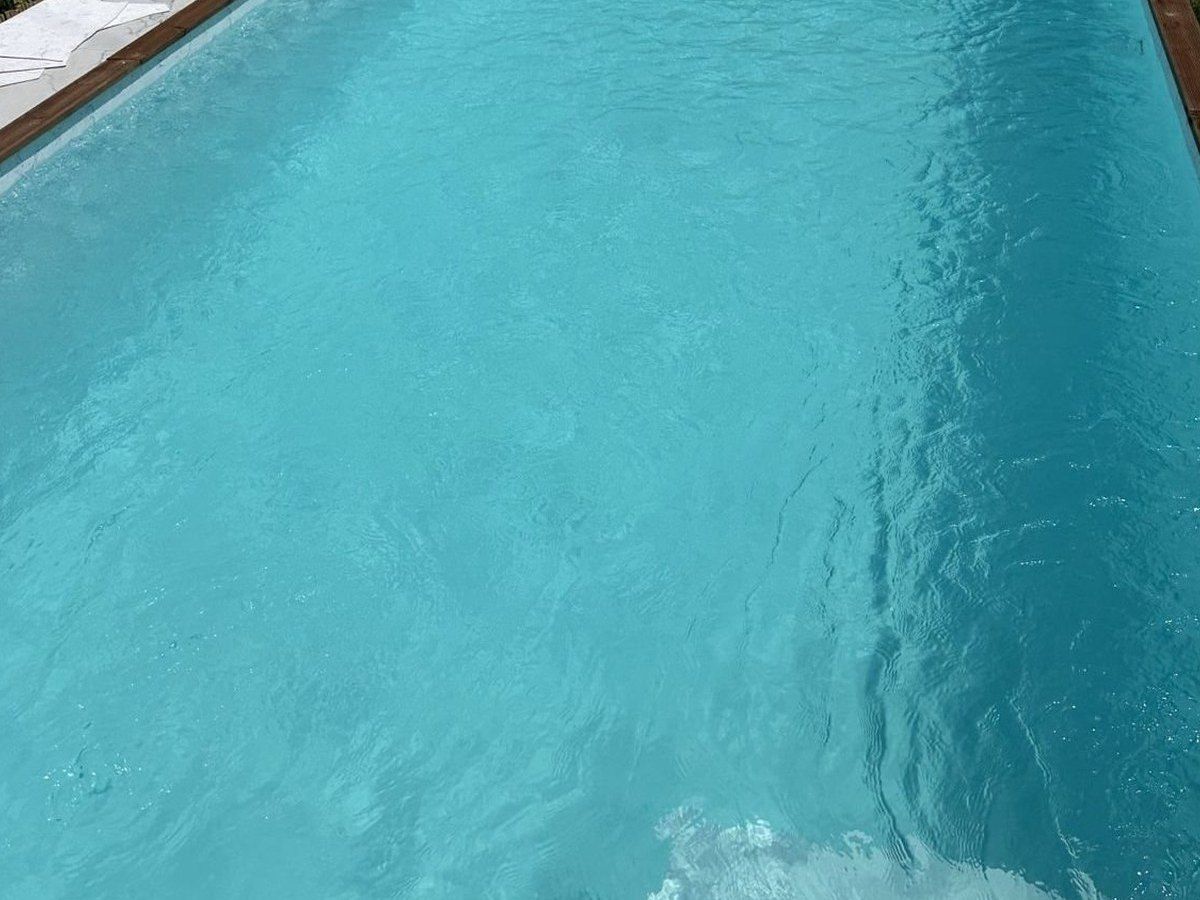
In most cases the answer is somewhere on this list. If not, send a photo on WhatsApp and we will tell you. See also filtration.